We use cookies and similar technologies to help personalise content, tailor and measure ads, and provide a better experience. By clicking ‘Accept All’ or turning an option on in ‘Configure Settings’, you agree to this, as outlined in our Cookie Policy. To change preferences or withdraw consent, please configure your cookie settings.
Our Platform uses various types of cookies, each of which has a specific function. Below you can manage your preferences.
Technical Cookies
These cookies are essential to provide you with services available through this Platform and to use some of its features, such as access to secure areas. Without these cookies, services you have asked for, like transactional pages and secure login accounts, would not be possible.
Functionality Cookies
These cookies serve a variety of purposes related to the presentation, performance and functionality of this Platform. Their overall purpose, however, is to enhance visitors’ experience and enjoyment of this Platform. For example, some of these cookies enable visitors to specify language, product or other platform preferences.
Analytical Cookies
These cookies, including those from third parties, are used to collect information about how visitors use our Platform. The information gathered does not identify any individual visitor and is aggregated. It includes the number of visitors to our Platform, the platforms that referred them to our Platform and the pages that they visited on our Platform. We use this information to help run our Platform more efficiently, to gather broad demographic information and to monitor the level of activity on our Platform.
Advertising Cookies
These cookies, including those from third parties, are aimed at creating profiles related to you and are used to deliver adverts more relevant to you and your interests in line with your preferences expressed while surfing the web. They are also used to limit the number of times you see an advertisement as well as help to evaluate the effectiveness of advertising and promotion. They are usually placed by advertising networks with our permission. They remember that you have visited a platform and this information is shared with other organisations such as advertisers.
Social Cookies
These cookies are third party cookies (e.g. Facebook) that allow you to interact with social media platforms. The companies that serve these cookies may also use your information to serve targeted advertising on other platforms.
Third party cookies are cookies from sites or web servers other than our own, which are also used for the purposes of those third parties.
For more information about the cookies used on our site, their characteristics and how to manage your consent to their use, you can consult our Cookie Policy.
By clicking “Save and close” you declare that you consent to the use of cookies according to the above preferences.
By clicking "Accept all" you declare that you consent to the use of all cookies stated above.
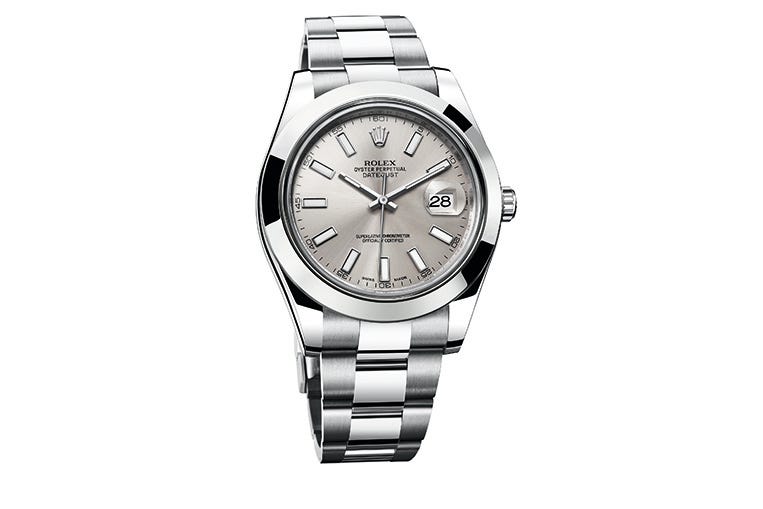
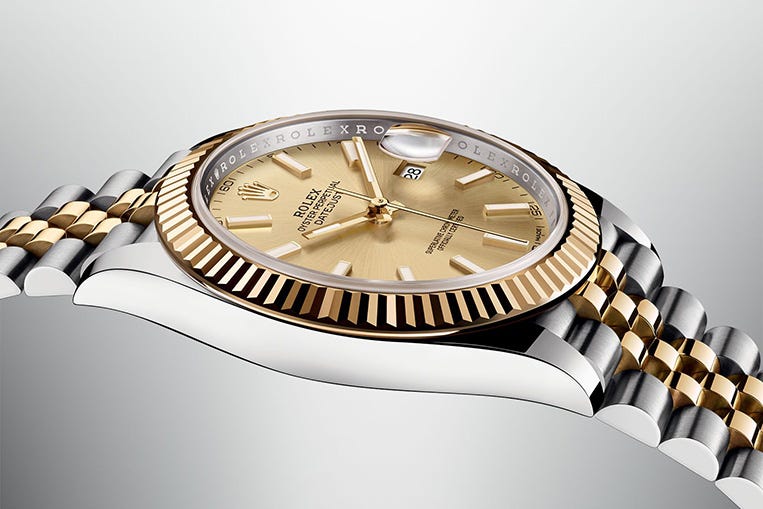
A date display on a mechanical watch is nowadays fairly commonplace; you use a watch to tell the time, so it stands to reason that you might expect it to tell the date as well. However, when Rolex created the Datejust in 1945, the brand did something quite extraordinary for the time: it introduced a watch that featured the world's first self-changing date. Tucked neatly into an aperture at 3 o’clock was a calendar display that ticked through the days of the month—and this is the kind of calendar you’re likely to find in the majority of mechanical timepieces today.
In its most basic form, a calendar display is a fairly straightforward complication. Most people understand the hour wheel as part of the motion works—that is, controlling the rotation of the hour and minute hands. In a watch with a date display, it’s also what powers the date train. Most watches operate on a 12-hour dial, and so the hour wheel rotates once every 12 hours. This rotation then moves the date disc driving wheel round at double the ratio, to account for the 24 hours in a day. The date disc driving wheel is equipped with a single tooth, which in turn rotates the date disc once per day, and this is what you can see through the date window on the dial.
In 1945, Rolex released the groundbreaking Datejust—the first watch to feature a self-changing date
However, it’s not totally infallible. Many date change mechanisms start to engage the date train at 10pm, and the process will last until it disengages at 2am; trying to set the date during this period of time can damage the teeth of the mechanism. This kind of calendar also requires the wearer to change the date at the end of the month, as the mechanism is unable to make a distinction between months with differing numbers of days in them.
As far as complications go, it’s a relatively simple one—which was exactly the point. A comparatively straightforward calendar display meant a more affordable price tag, and a wider market to appeal to. The more complex kind of date display, annual and perpetual calendars, had been around since the 1800s, but staying on top of the Gregorian calendar was no mean feat.
As we all learn in our formative schooling, the Gregorian year has seven months of 31 days, four months of 30 days—and then pesky little February, which has 28 days. Until, of course, the leap year rolls around once every four years, during which February is graced with an extra day.
The days tick past in a small aperature at 3 o'clock, before needing to be adjusted at the end of each month
Understandably, keeping track of this mechanically was a daunting challenge for watchmakers, but one that they were happy to meet. The annual calendar only needs to be changed once per year at the end of February, as its mechanism is configured to know how many days are in each month for one normal calendar year. Perpetual calendars are even more impressive still; complete with the ability to determine leap years, they will not need to be adjusted again, incredibly, until the year 2100, when the leap year is skipped at the turn of the century.
These types of complications require hundreds of parts and the skills of an experienced watchmaker—and that sort of intricate workmanship inevitably comes at a price. While technically complicated calendars were something to marvel at, the Datejust—and the watches that followed with simple calendar functions—made the date display affordable to all.